
+1 (540) 373-2200
+1 (804) 373-2200
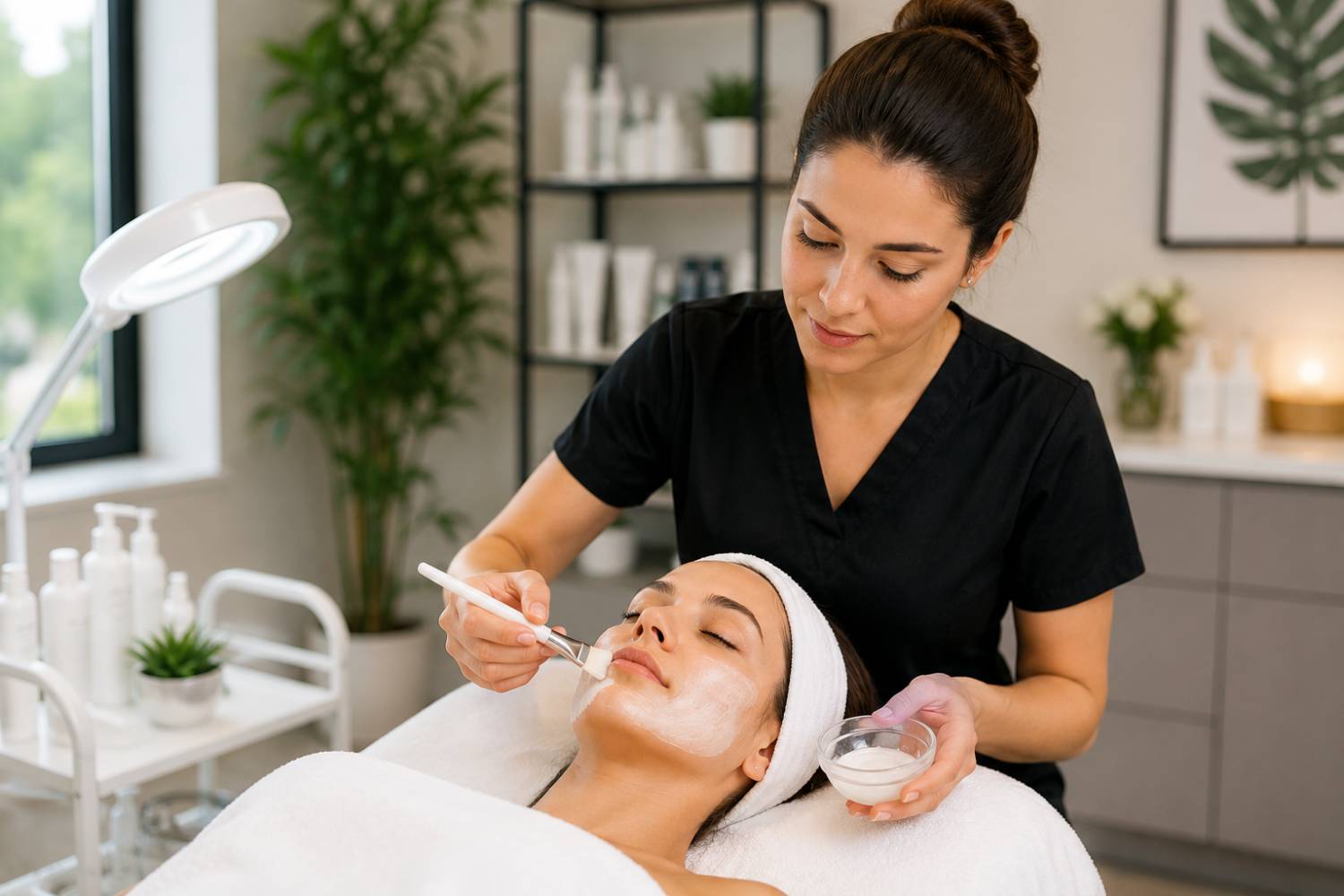
Choosing advanced esthetics training is a significant step for a licensed esthetician who wants to take on more specialized work. There are many things to compare before enrolling. The course content matters, but so do the practical training, instructors, learning environment, and preparation for the next stage of your career.
The right Master Esthetician Training Program in Fredericksburg should help you build on the skills rather than simply repeat the basics. It should also give you opportunities to practice advanced treatments and become more comfortable working in settings that resemble the environments you may enter after graduation.
Before choosing a program, take some time to look beyond the course title. The details of the training can tell you much more about what you will actually gain from the experience.
Review the curriculum first. In an advanced esthetics course, one can expect not only to gain skills beyond basic skin care but also be able to use products commonly used in the workplace environment.
For example, a master esthetics program may include training in:
These are practical skills, so it is worth asking how they are taught. Reading about a treatment is one thing. Learning how to perform it correctly and becoming comfortable with the equipment and products involved is another. A well-planned curriculum should also give you a clear idea of how the different skills fit into actual esthetics work.
Advanced esthetics is a hands-on field. While it is essential to be able to understand why certain things are done in a particular way and what theories support the procedures performed, one has to learn by doing.
So when choosing between different options, consider how many chances there will be to get practical experience in the program. Combining classroom instruction with practical exercises can be a great option to allow students to use the knowledge gained.
Moreover, it will be important to consider the learning environment as well. Working in a real MedSpa, for example, will be a great option to get used to the pace and requirements of a working environment and to be able to work with various techniques, tools, and products.
The experience of the instructors may make a great deal of a difference in terms of an advanced training course. It may be easier for those who have a lot of experience to provide examples that will be hard to find only in a book. The instructors will have seen different customer requirements and dealt with various practical issues and know about treatment in practice.
It would be worth checking what the amount of experience the instructors have and whether there will be regular possibilities to benefit from their teaching.
If licensing is part of your next step, this should be one of the first things you check. A program should explain how its curriculum relates to the applicable Virginia Department of Professional and Occupational Regulation (DPOR) requirements. You should also understand what the course does to prepare students for board examinations and practical testing.
This does not mean choosing a program based only on its exam preparation. You are building skills for a career, not simply working toward a test date. Still, knowing that the training is structured around the relevant requirements can give you a clearer picture of what you are working toward.
The products and tools used during training shape your experience too. Ask which product lines students work with and what equipment will actually be available for practice. Familiarity with professional skincare products makes the transition into a workplace a lot smoother, especially when you're expected to understand how different products factor into a treatment. A well-rounded nursing program can also provide students with valuable healthcare knowledge that complements their understanding of patient care and professional practices.
Some master esthetics programs give students their own supplies to practice with. Having access to these materials means more time actually practicing instead of just watching demonstrations from the sidelines.
If you are interested in medical spas or clinical aesthetics, look closely at whether the program provides exposure to treatments beyond traditional spa services.
Some advanced programs offer additional clinical training after students have met the required DPOR criteria. This type of training may cover procedures such as:
This can be particularly useful for someone who already knows that they want to work in a medical spa, laser clinic, or similar environment.
The important point is to check what is actually included in the program and what is offered separately or as an optional component. Knowing this beforehand helps you choose training that matches your career plans.
The right master esthetics program is not necessarily the one with the longest list of features. It is the one that fits what you want to do next.
At Eastern Virginia Career College (EVCC), the Master Esthetics Program is designed for licensed estheticians who want to build on their existing knowledge and move into more advanced work. The program combines theoretical instruction with hands-on practice, and gives students experience in a real MedSpa environment. Students are also taught by industry professionals with more than 20 years of experience.
Who is a Master Esthetician Program designed for?
A master esthetics program is generally intended for licensed estheticians who want to expand their existing knowledge and develop advanced skills.
What skills can I learn in master esthetics training?
Training may include advanced services such as microdermabrasion, chemical peels, dermaplaning, LED treatments, and microcurrent facial toning.
Is hands-on training important for master esthetics?
Yes. Esthetics involve practical techniques that are difficult to learn through theory alone. Hands-on practice gives students an opportunity to work with professional products and equipment while developing greater confidence with advanced treatments.
Can master estheticians work in medical spas?
Master estheticians may pursue careers in settings such as medical spas, dermatology offices, laser clinics, and advanced skincare studios.